
Introduction: A Workforce Crisis Hidden in Plain Sight
Cybersecurity has moved from being a purely technical concern to a clear board-level priority. As organizations accelerate digital adoption, their exposure to cyber threats grows at the same pace. Cloud platforms, remote workforces, connected devices, and data-driven business models have fundamentally changed how companies operate. However, beneath this progress lies a critical challenge that many leaders underestimate: the cybersecurity skills shortage.
Despite record investments in digital infrastructure, businesses across industries struggle to recruit and retain qualified cybersecurity professionals. Open positions remain unfilled for months, and existing teams are often stretched thin.
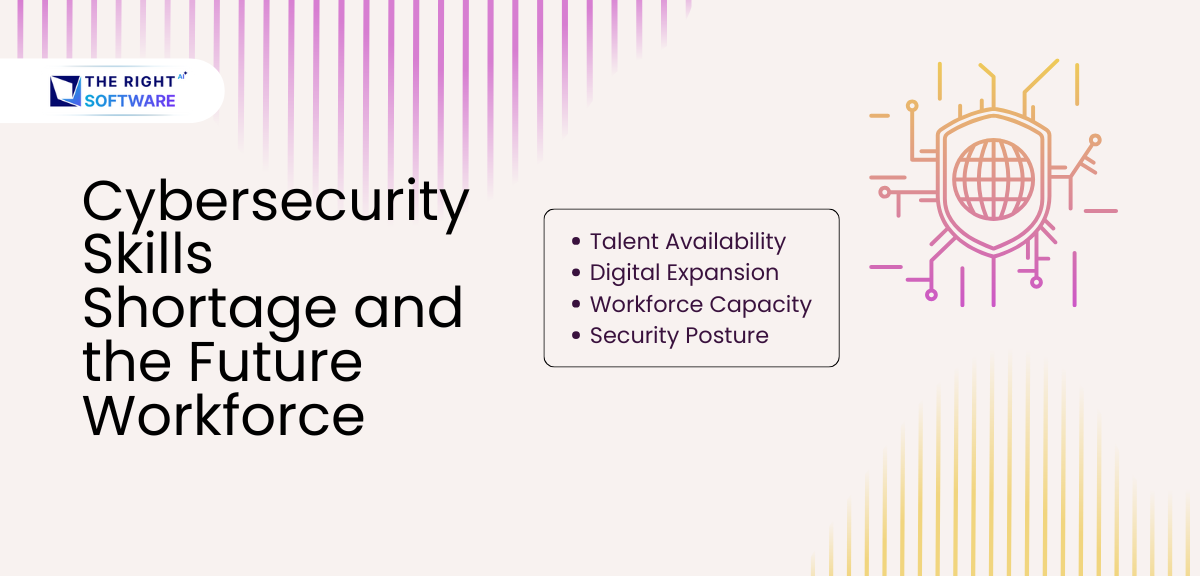
| Area | Current Reality | Business Impact |
|---|---|---|
| Talent Availability | High demand, limited skilled professionals | Prolonged hiring cycles and rising costs |
| Digital Expansion | Cloud, remote work, IoT, AI adoption | Expanded attack surface |
| Workforce Capacity | Overloaded security teams | Burnout and higher turnover |
| Security Posture | Reactive rather than proactive | Increased breach risk |
| Competitive Advantage | Security treated as a cost center | Slower innovation and growth |
Explore: How Large Language Models Work?
This shortage is not a short-term hiring issue caused by market fluctuations. Instead, it represents a structural workforce challenge that will shape how organizations operate, scale, and protect themselves in the coming decade.
For companies navigating cloud migration, hybrid work models, artificial intelligence adoption, and increasingly complex regulatory requirements, the lack of skilled cybersecurity talent creates measurable operational risk. Security gaps delay innovation, increase exposure to breaches, and strain internal teams. However, this challenge also presents a strategic opportunity. Organizations that rethink workforce models, invest in upskilling, and partner with experienced technology providers can transform cybersecurity from a constraint into a competitive advantage.
Industry Insight:
More than 70% of organizations report moderate to severe cybersecurity staffing shortages, yet digital adoption continues to accelerate across cloud, AI, and remote work environments.
This article explores why the cybersecurity skills shortage exists, how it is reshaping the future workforce, the business risks of inaction, and what organizations can do today to build a resilient, future-ready cybersecurity capability.
Understanding the Cybersecurity Skills Shortage
What Is Driving the Talent Gap?
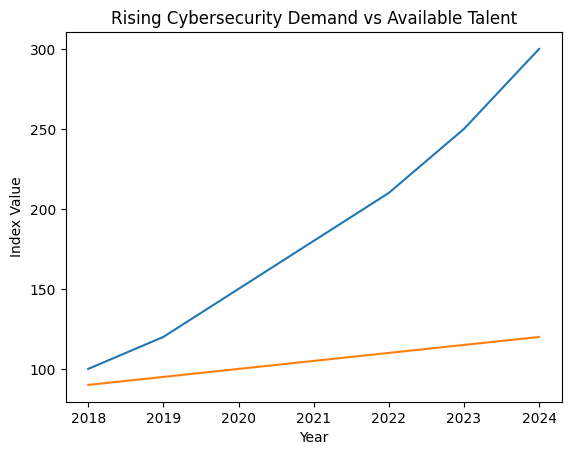
The cybersecurity skills shortage refers to the growing mismatch between the demand for cybersecurity expertise and the supply of qualified professionals. While demand continues to rise sharply, the talent pipeline has failed to keep pace. Several interconnected factors contribute to this imbalance.
First, the digital attack surface has expanded dramatically. Cloud computing, Internet of Things (IoT) devices, software-as-a-service platforms, and remote work environments introduce new vulnerabilities. Each system, endpoint, and integration point represents a potential entry path for attackers. As a result, organizations require broader and more specialized security skill sets than ever before.
Second, the pace of technological change has outstripped traditional education and training models. Universities and certification programs often struggle to update curricula quickly enough to reflect real-world threats. Many graduates enter the workforce with strong theoretical knowledge but limited hands-on experience in modern security environments. Consequently, employers face a skills mismatch even when candidates hold relevant credentials.
Third, cybersecurity roles demand multidisciplinary expertise. Professionals must understand networks, cloud infrastructure, software development, compliance frameworks, risk management, and human behavior. In many cases, they must also communicate complex risks to non-technical stakeholders. This level of complexity narrows the pool of qualified candidates and increases onboarding time.
The Numbers Behind the Shortage
Global research consistently reports millions of unfilled cybersecurity roles. While exact figures vary by region and industry, the trend remains consistent: demand continues to grow faster than supply. This shortage affects both developed and emerging markets, making it a global workforce issue rather than a regional anomaly.
Large enterprises often compete aggressively for the same limited pool of experienced professionals. This competition drives up salaries and benefits but does not address long-term workforce sustainability. Smaller organizations, meanwhile, struggle to attract senior talent altogether, leaving them more vulnerable to cyber threats.
In addition, cybersecurity demand continues to expand as regulations tighten and digital transformation accelerates. Industries such as finance, healthcare, e-commerce, and SaaS face particularly acute pressure due to sensitive data handling and regulatory oversight.
Why Traditional Hiring No Longer Works
Many organizations continue to rely on outdated hiring models that are poorly suited to the cybersecurity labor market. Job descriptions often list extensive requirements across multiple domains, discouraging otherwise capable candidates from applying. At the same time, limited career progression and high-pressure environments contribute to poor retention.
Moreover, cybersecurity burnout is becoming increasingly common. Professionals face constant alert fatigue, incident response pressure, and the expectation of being always available. As a result, turnover rates remain high, further exacerbating the talent gap. Hiring alone cannot solve this problem without fundamental changes to workforce strategy.
How the Skills Shortage Is Shaping the Future Workforce
From Static Roles to Adaptive Skill Sets
The future cybersecurity workforce will not be defined by rigid job titles or narrow specializations. Instead, it will focus on adaptive skill sets that evolve alongside emerging threats and technologies. Continuous learning will become a core requirement rather than an optional benefit.
For example, security engineers increasingly need cloud-native expertise. Understanding identity and access management, container security, and cloud configuration is now essential. Similarly, software developers are expected to understand secure coding principles and threat modeling. This convergence blurs the traditional boundaries between IT, development, and cybersecurity roles.
Organizations that support skill mobility and cross-functional learning will be better positioned to adapt. Rather than hiring for static roles, they will build flexible teams capable of responding to change.
| Traditional Focus | Emerging Skill Requirement |
|---|---|
| Network Security | Cloud-native security |
| Manual Monitoring | Automated threat detection |
| Isolated Security Teams | Cross-functional security awareness |
| Static Certifications | Continuous learning models |
Automation and AI as Force Multipliers
Automation and artificial intelligence play a critical role in addressing the cybersecurity talent gap. While these technologies do not replace human expertise, they significantly reduce repetitive workloads and improve threat detection accuracy.
Modern security operations centers rely on automated monitoring, incident response workflows, and AI-driven analytics. These tools help prioritize alerts, identify anomalies, and accelerate response times. As a result, smaller teams can manage larger and more complex environments.
However, automation introduces new skill requirements. Professionals must understand how to configure, manage, and interpret automated systems. They must also recognize limitations and avoid overreliance on tools. Therefore, the skills shortage evolves rather than disappears, shifting toward higher-level analytical and strategic capabilities.
IF system_activity == abnormal
   THEN trigger_alert()
   IF risk_level == high
      THEN auto_isolate_system()
      notify_security_team()
END IF
This simplified workflow shows how automation helps security teams respond faster, even with limited human resources.
Remote Work and Global Talent Access
Remote work has fundamentally reshaped workforce dynamics. Organizations can now access global talent pools, reducing geographic constraints and expanding hiring options. This shift offers significant potential to alleviate regional talent shortages.
However, remote work also introduces new security risks. Distributed teams increase exposure to phishing attacks, unsecured endpoints, and identity-based threats. Consequently, organizations must ensure that employees across all functions understand security best practices.
Security awareness, secure collaboration tools, and strong identity management become essential components of the modern workforce model.
Cybersecurity as a Shared Responsibility
In the future workforce, cybersecurity will no longer be confined to a single department. Instead, it will become a shared responsibility across engineering, operations, and leadership. Security-conscious cultures will outperform organizations that treat cybersecurity as an isolated function.
Executive involvement, regular training, and secure development practices will define mature organizations. When security is embedded into daily workflows, resilience improves across the entire business.
Business Risks of Ignoring the Skills Gap
Increased Exposure to Cyber Threats
Organizations that lack skilled cybersecurity professionals face a higher likelihood of breaches and operational disruptions. Limited expertise often results in delayed threat detection and slower incident response.
For example, misconfigured cloud environments remain one of the most common causes of data exposure. Without skilled oversight, these issues persist unnoticed until they are exploited. In many cases, breaches occur not because of advanced attacks but due to basic security gaps.
| Risk Area | Short-Term Effect | Long-Term Consequence |
|---|---|---|
| Threat Detection | Delayed response | Larger breach impact |
| Compliance | Audit failures | Financial penalties |
| Innovation | Slower releases | Competitive disadvantage |
| Brand Trust | Customer concern | Reputation erosion |
Regulatory and Compliance Challenges
Regulatory frameworks continue to expand across regions and industries. Data protection laws, industry standards, and security certifications require specialized knowledge to interpret and implement correctly.
Without qualified professionals, organizations struggle to maintain compliance. This leads to increased audit findings, financial penalties, and reputational damage. Over time, compliance failures erode stakeholder trust and increase operational risk.
Slowed Innovation and Growth
Security gaps often slow innovation. When teams lack confidence in their security posture, they delay product launches, limit feature development, or avoid adopting new technologies.
In contrast, organizations with strong cybersecurity capabilities innovate faster. By integrating security into development and operations, they reduce friction and enable controlled experimentation. Security becomes an enabler rather than a barrier.
Financial and Reputational Impact
Cyber incidents carry significant financial costs beyond immediate remediation. Legal fees, regulatory fines, and downtime create long-term financial strain. Customer churn and loss of trust further compound these losses.
In competitive markets, reputation is a critical differentiator. Security failures undermine brand credibility and can take years to recover from. Investing in cybersecurity skills is therefore a business necessity, not a discretionary expense.
Strategies to Build a Future-Ready Cybersecurity Workforce
Rethinking Talent Development
Organizations must shift focus from pure talent acquisition to sustainable talent development. Internal upskilling programs reduce dependency on external hiring and improve retention.
For example, training developers in secure coding practices strengthens security at the source. Similarly, cross-training IT staff in security fundamentals builds organizational resilience. Structured learning paths and mentorship programs support long-term capability growth.
Partnering with Technology Experts
Strategic partnerships provide access to specialized expertise without the constraints of permanent hiring. Managed security services, consulting, and secure software development offer scalable solutions aligned with business needs.
At The Right Software, security is embedded into every solution. TRS helps organizations design, build, and maintain secure digital systems that align with both operational and strategic objectives. This partnership model allows businesses to focus on growth while maintaining strong security foundations.
Adopting Security-by-Design
Security-by-design integrates protection into systems from the earliest stages of architecture and development. This approach reduces reliance on reactive controls and minimizes long-term risk.
Implementing DevSecOps practices ensures continuous security testing throughout the development lifecycle. As a result, vulnerabilities are identified and addressed before deployment, reducing remediation costs and delays.
security_checks:
  - dependency_scan: enabled
  - code_vulnerability_scan: enabled
  - access_policy_validation: enabled
deployment:
  proceed_if_secure: true
This example reflects how security checks can be embedded directly into development pipelines.
Leveraging Automation Wisely
Automation should augment human expertise rather than replace it. Organizations must select tools that align with their team’s capabilities and maturity.
Equally important, teams require training to manage and optimize automated systems effectively. When used wisely, automation improves efficiency while preserving strategic oversight.
Creating Sustainable Work Environments
Reducing burnout is critical to workforce sustainability. Clear processes, realistic workloads, and leadership support improve job satisfaction and retention.
A sustainable cybersecurity workforce delivers stronger outcomes than an overstretched team. Long-term resilience depends on people as much as technology.
| Action Area | Outcome |
|---|---|
| Upskilling Programs | Reduced talent dependency |
| Automation | Improved efficiency |
| Expert Partnerships | Scalable security |
| Security-by-Design | Lower long-term risk |
| Sustainable Teams | Better retention |
Conclusion: Turning the Skills Shortage into a Strategic Advantage
The cybersecurity skills shortage is not a temporary disruption. It is a defining factor in the future workforce. Organizations that recognize this reality and adapt their strategies will outperform those that rely on outdated hiring and security models.
By investing in skills development, leveraging automation, embedding security into operations, and partnering with experienced technology providers, businesses can strengthen their security posture while supporting growth and innovation.
The Right Software enables organizations to navigate this complex landscape with confidence. Through secure software development, cloud solutions, and strategic guidance, TRS helps businesses build resilient, scalable systems designed for the future.